
Standard capacity reference is the 30-egg tray with a 320 × 320 mm mould module. Actual capacity depends on product geometry, pulp recipe, drying conditions and the final project specification.
| Model | Rated capacity | Mould stations | Positioning | Learn more |
|---|---|---|---|---|
| ECPS-600E | 600 trays/hour | 2 | Compact | |
| ECPS-900E | 900 trays/hour | 3 | Compact+ | |
| ECPM-1200E | 1,200 trays/hour | 4 | Medium | |
| ECPM-1500E | 1,500 trays/hour | 5 | Medium+ | |
| ECPL-1800E | 1,800 trays/hour | 6 | High capacity | |
| ECPL-2200E | 2,200 trays/hour | 6 | Maximum standard output |
Nominal rates reference a standard 30-egg tray. Capacity varies with product geometry, pulp recipe, moisture target, drying conditions and mould configuration. Confirm final figures with a project specification.
A standardized platform for molded-fiber production. Six models from 600 to 2,200 trays per hour, engineered around a common industrial architecture.
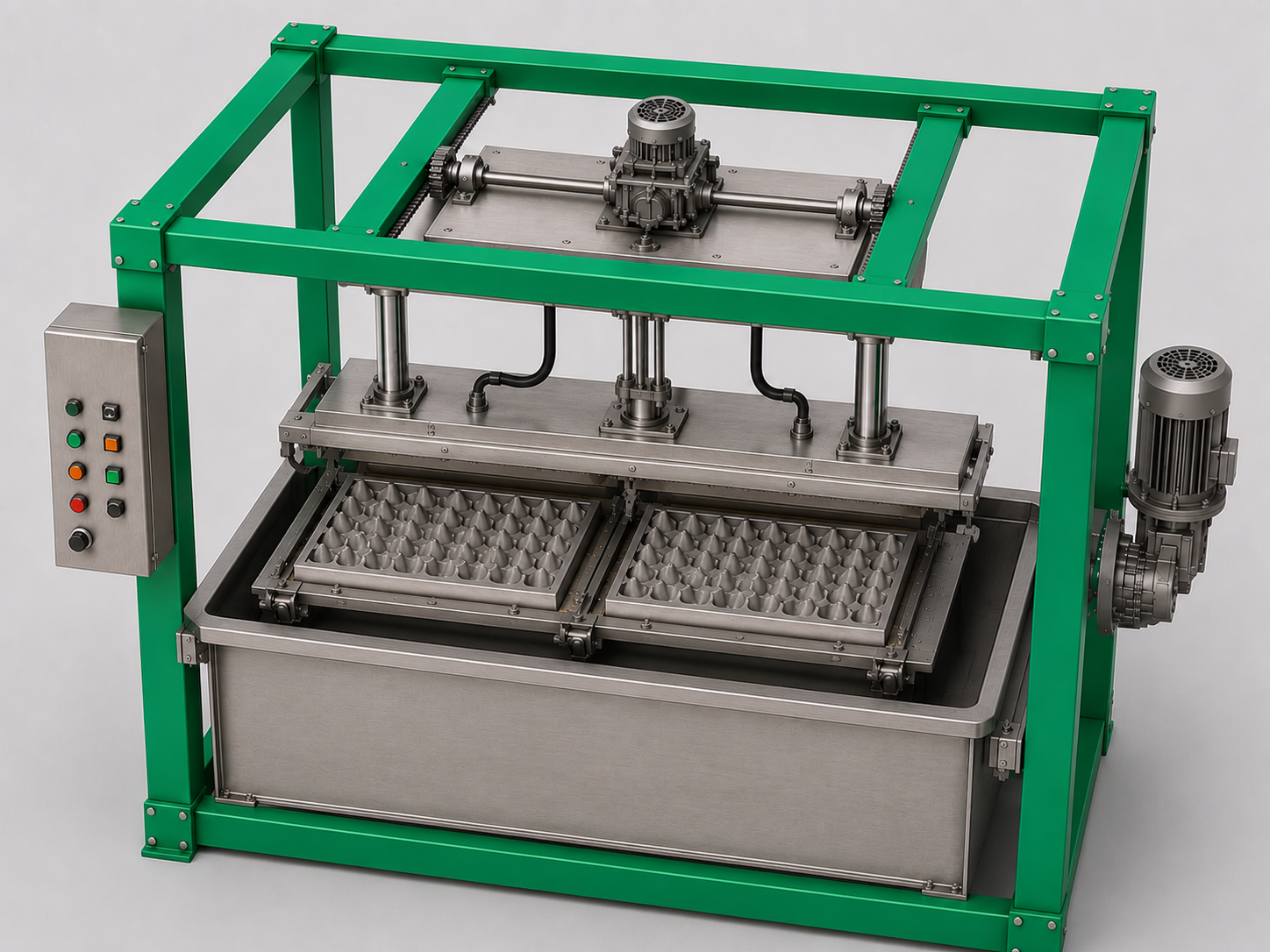
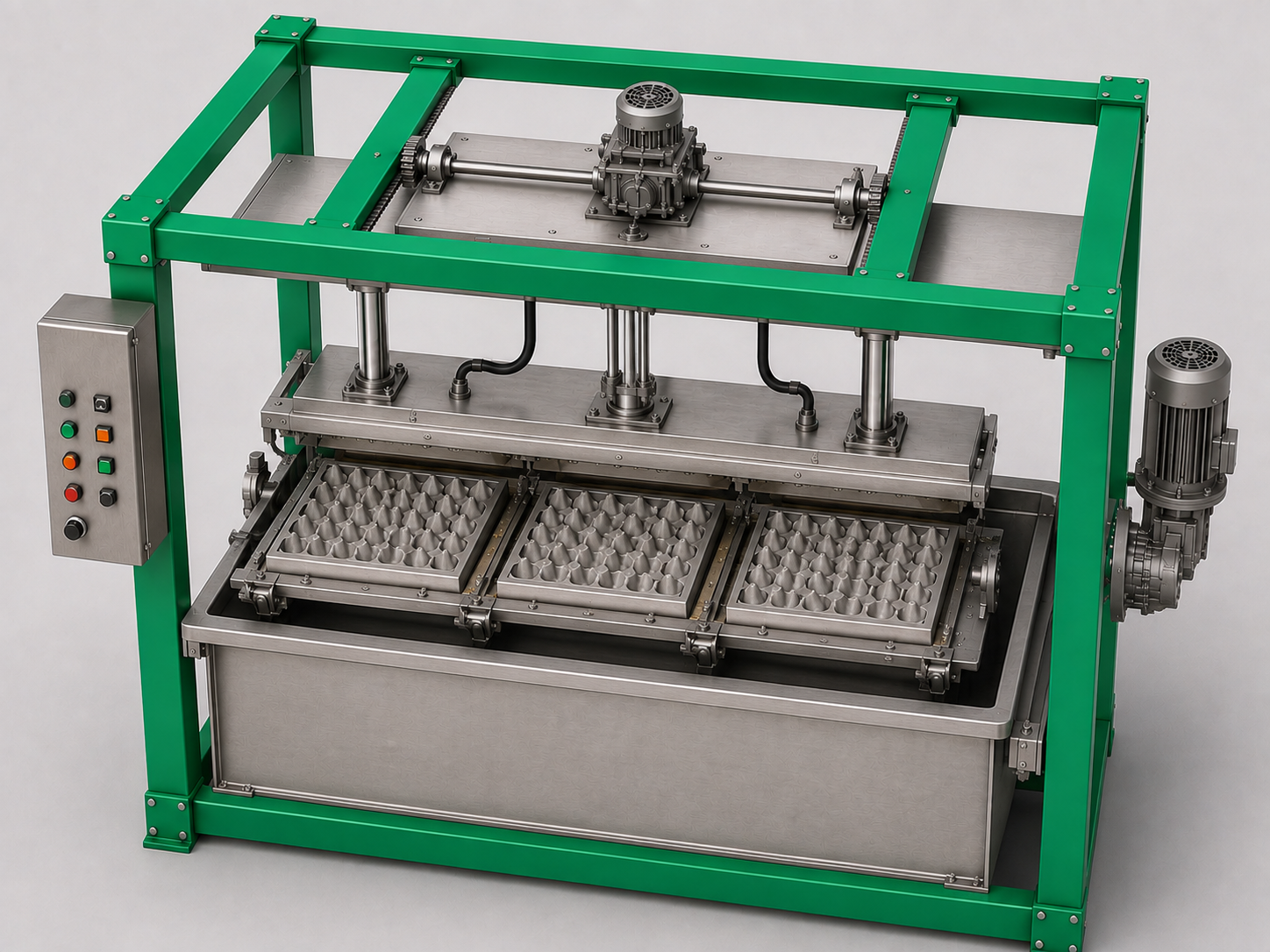
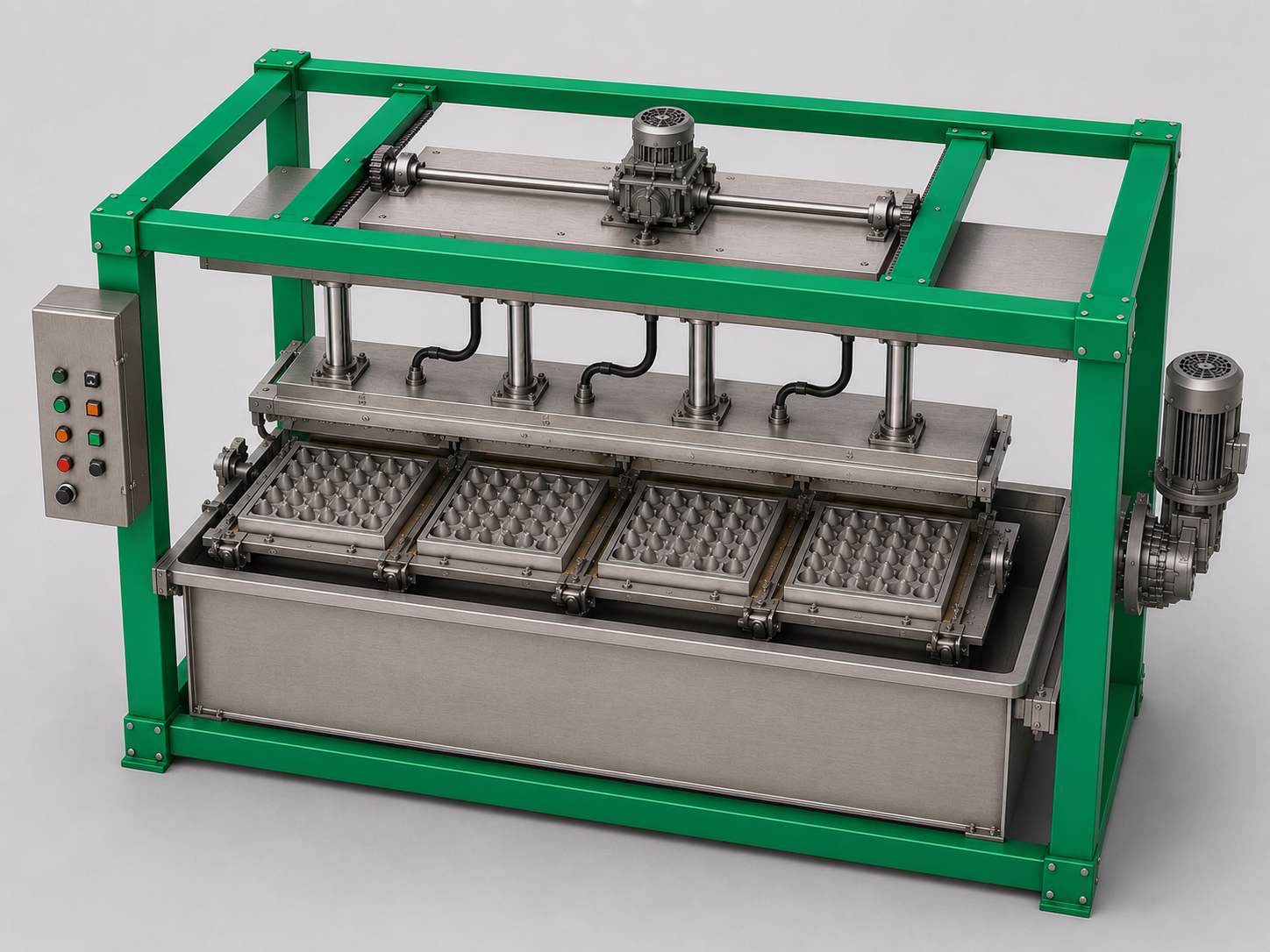
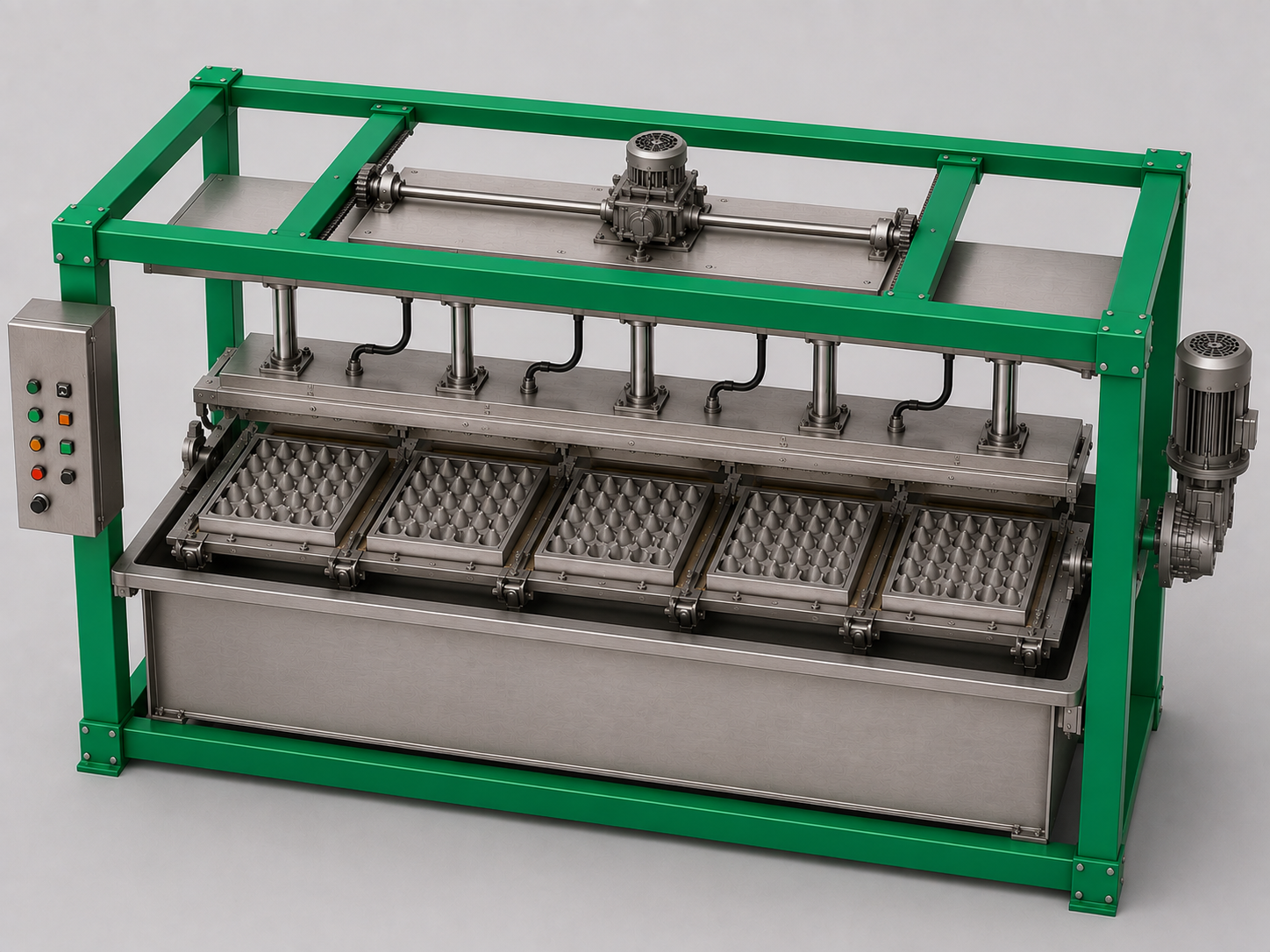
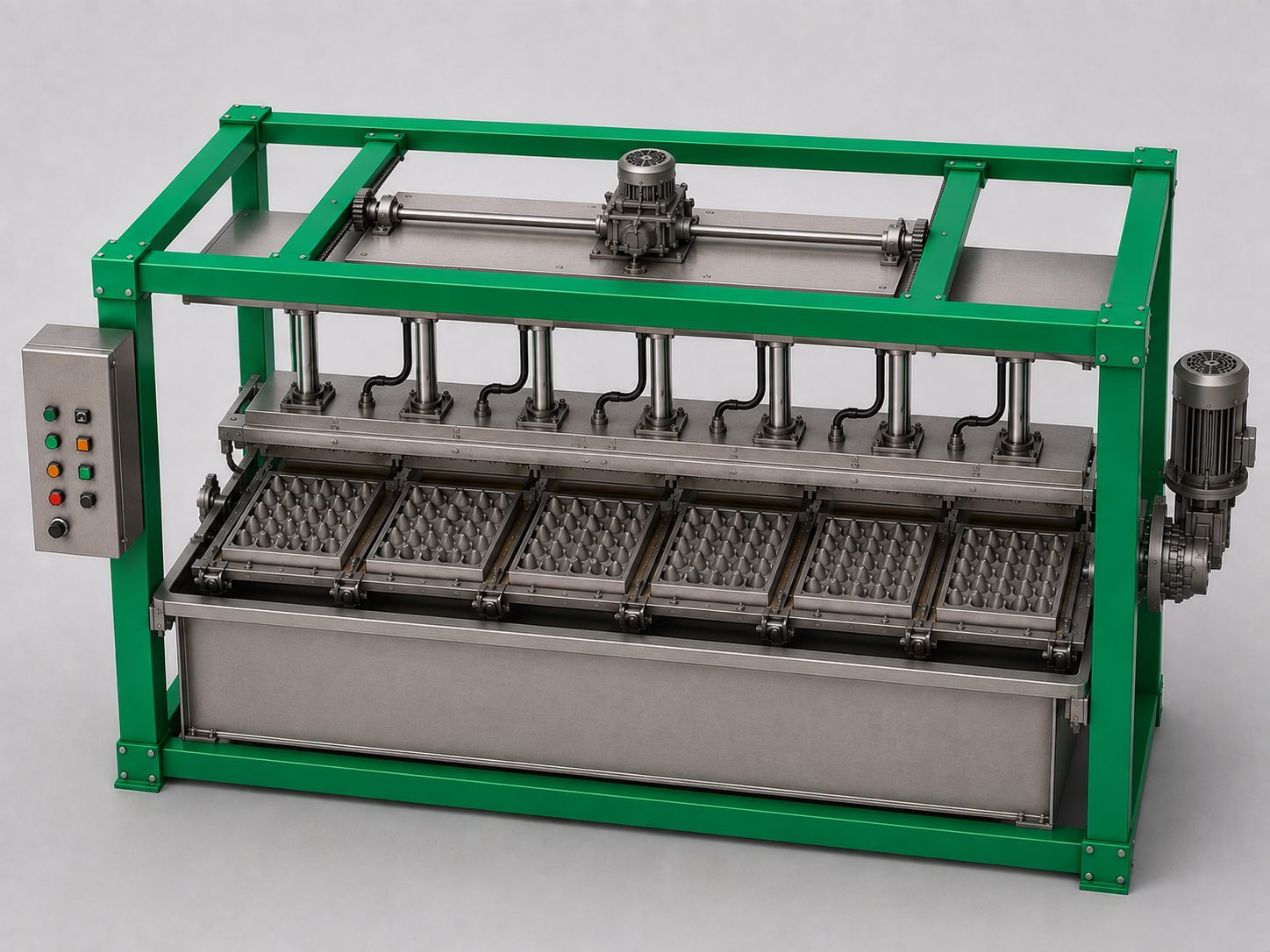
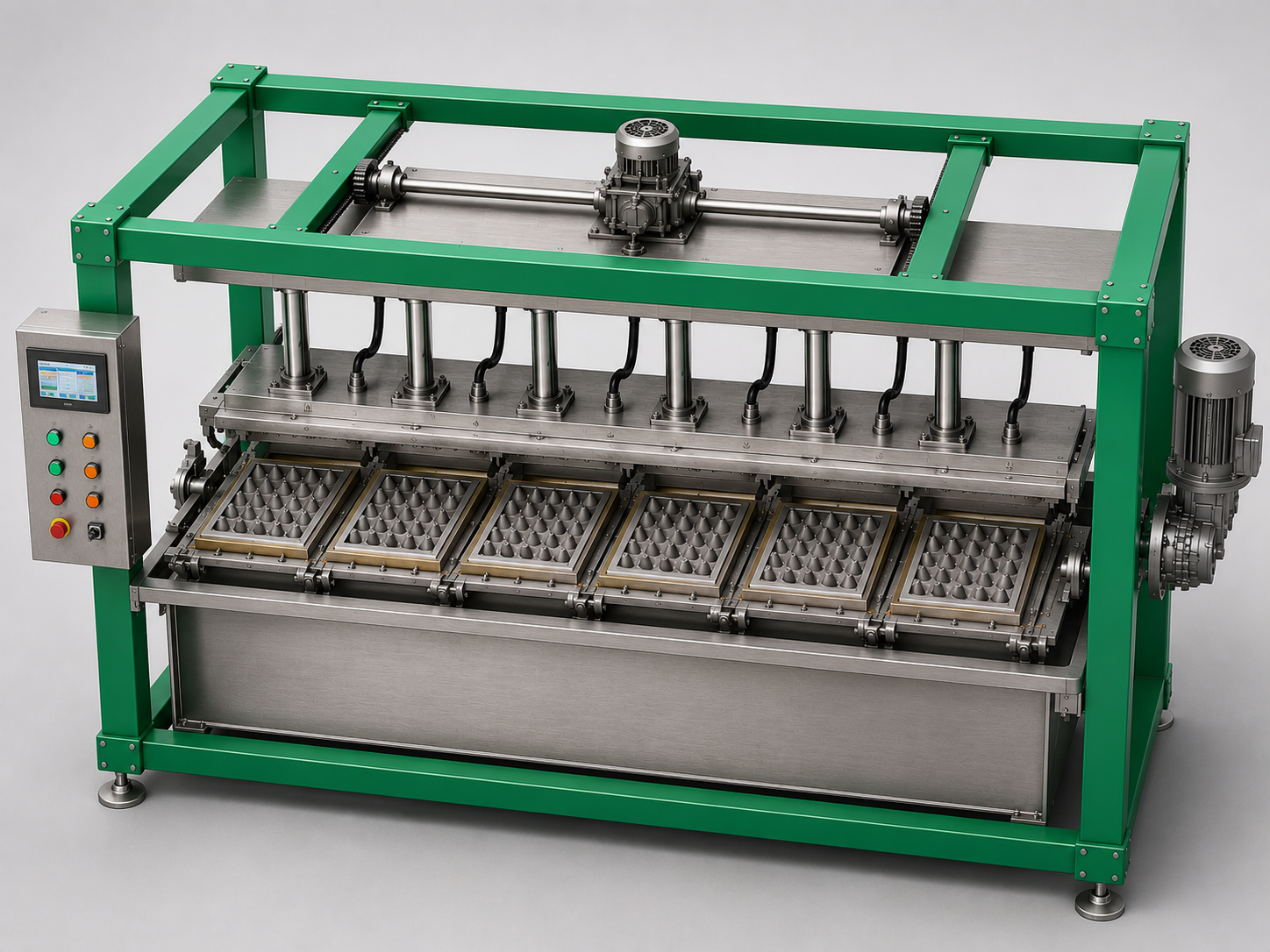
Machine images are shown for presentation purposes. Actual machines may differ slightly in appearance and configuration.
From recovered paper to finished molded-fiber products, the GDM ECP production line combines pulp preparation, vacuum forming and controlled drying in one continuous process.
Recovered paper and water are mixed to create pulp.
Two primary tanks store the prepared pulp suspension.
The secondary tank feeds the molding section at a steady rate.
Fiber is vacuum-formed into molded-fiber products on product-specific moulds.
Electrical control panel that operates and monitors the line.
Supplies compressed air for the line’s pneumatic systems.
Provides the negative pressure used during molded-fiber forming.
Continuous metal dryer that removes moisture from the formed products.
For projects that need higher total output, a dual-line configuration can be engineered around shared upstream infrastructure. One pulp-preparation system feeds two independent forming lines, each with its own dryer, converging to a single finished output.
Recovered paper enters the shared pulp-preparation system.
One engineered pulp-preparation system with pulper, tanks, mixers and pumps serves both lines.
An independent forming branch with its own forming machine and dryer.
A second independent forming branch with its own forming machine and dryer.
Both branches converge to the finished output.
An engineered pulp-preparation system can support two molding lines, reducing unnecessary duplication of upstream equipment where project design allows.
The two molding lines operate as separate production branches, giving the plant greater operating flexibility.
If one molding line is stopped for maintenance or service, the second line can continue production.
Final dual-line configuration, pulp-preparation capacity, compressed-air capacity, utilities and auxiliary equipment are engineered according to selected line capacities, product requirements and project conditions.
Indicative guidance based on production scale. Final sizing is always confirmed against your product and site conditions.
Established producers running regular commercial output with room to grow.
High-volume continuous operation with a demanding daily output target.
The top of the standard ECP range for the highest achievable output.
Send us your target product, capacity and site conditions. We respond with a line configuration recommendation.
Send us your target product, capacity and site conditions. We respond with the line configuration that fits.